Choosing the right hosting type can feel confusing. People talk about reseller plans, cPanel, VPS, cloud, and dedicated servers as if they are the same thing — but they are different tools for different needs. This guide on GistVibes explains each option in clear, simple language, gives practical examples, and shows when to use each one. Read this like a friendly walkthrough — no jargon that hides meaning. What is Reseller Hosting Reseller hosting means you buy hosting space from a bigger provider and sell parts of it to your own customers under your brand. Think of it like renting an apartment block, then subletting individual rooms. Key points: You do not manage physical servers. The main host handles hardware, network, and core maintenance. You usually get a control panel (like WHM) that lets you create individual accounts, set limits (disk space, bandwidth), and manage billing. It’s cost-effective for beginners and web designers who want to offer hosting with their design service. Real example: If your reseller package gives you 200 GB disk and 2 TB bandwidth, you can sell 20 accounts of 10 GB each, or mix sizes (e.g., 10 × 20 GB + 10 × 10 GB). Pricing model: you pay one monthly fee to the provider (e.g., $20/mo) and set your own retail prices (e.g., $5–$15/mo per account). Pros: Low technical overhead (no server admin required) Fast time to start — you can be selling same day Lower upfront cost Cons: Less control over server settings and performance You depend on the parent provider’s uptime and support Harder to scale beyond the resources in your reseller plan Best for: Freelancers, web agencies, and first-time hosting sellers. What is cPanel Hosting cPanel is a popular control panel — a graphical interface that simplifies server and website management. When people say “cPanel hosting,” they usually mean hosting that includes cPanel for users. Key points: cPanel gives tools for website files, email setup, databases (MySQL), DNS, backups, and one-click installers (WordPress, Joomla). It is user-friendly: non-technical users can add email accounts, install apps, and manage files without command-line knowledge. cPanel can be on shared hosting, reseller hosting, VPS, or even dedicated servers. Real example: On cPanel, you can create an email like hello@yourdomain.com in 30 seconds, or install WordPress in 2 clicks. Pros: Very easy for clients and site owners Standardized interface across many hosts Lots of documentation and community help Cons: Licensing cost for hosts (sometimes passed to customers) Less ideal for custom server administration tasks (command line still more powerful) Best for: Small businesses, bloggers, and clients who need a simple dashboard. What is VPS Hosting (Virtual Private Server) A VPS is a virtual machine on a physical server that behaves like a separate server with dedicated resources. Imagine slicing a large server into several smaller, private servers — each slice is a VPS. Key points: Resources (CPU, RAM, storage) are allocated to each VPS — they don’t change when neighbours use more resources. You get root access (or equivalent), so you can configure software, install custom apps, and control security settings. Performance is more reliable than shared hosting, and costs are below dedicated servers. Common resource examples: Small VPS: 1 vCPU | 1–2 GB RAM | 25–40 GB SSD Medium VPS: 2–4 vCPU | 4–8 GB RAM | 80–160 GB SSD Large VPS: 4+ vCPU | 16+ GB RAM | 200+ GB SSD Pros: Predictable performance and isolation Full control for custom setups Scales well by upgrading CPU/RAM/storage Cons: Requires more sysadmin knowledge (or paid managed support) Costs more than shared/reseller hosting Best for: Growing websites, multiple client hosting, small application servers, and light e-commerce stores. What is Cloud Hosting Cloud hosting runs your site across a network of servers (a “cloud”) so resources come from multiple machines rather than one box. It’s designed for flexibility and high availability. Key points: Resources are elastic: CPU, RAM, and storage can scale up or down automatically based on demand. Failover is built in: if one node fails, another picks up the load, making uptime stronger. Pricing is often pay-as-you-use (hourly or per resource) rather than fixed monthly for a single server. Service models you may see: Multi-node web clusters (for high traffic) Managed cloud hosting (provider handles the cluster) Container based services for modern app deployment Pros: Excellent scalability for traffic spikes High availability and resilience Good for unpredictable workloads Cons: Can be more expensive if not optimized (you pay for what you use) More complex to configure (load balancers, auto-scaling, storage) Billing models may be harder to forecast Best for: Fast-growing startups, high-traffic sites, SaaS products, and applications requiring redundancy. What is a Dedicated Server A dedicated server is a physical machine rented solely to you. You get all CPU cores, RAM, and storage — nothing is shared. Key points: Full hardware control: choose CPU, RAM, disk type (HDD vs SSD), and network bandwidth. Best performance and isolation; ideal for heavy workloads that need consistent resources. Requires experienced administrators for setup, security, and maintenance (or managed services). Real example: A dedicated server might have 8 CPU cores, 32 GB RAM, and 1 TB NVMe storage — ideal for multiple heavy sites or large databases. Pros: Highest performance and predictable costs for fixed hardware Total control over environment and security Best for compliance or resource-intensive tasks Cons: Highest monthly cost among these options Single point of failure unless you design redundancy Hardware upgrades require provider action or migration Best for: Large e-commerce, game servers, databases, streaming, and enterprise applications. Quick Comparison Table (Practical View) Reseller: Low cost → low control. Good to start fast. cPanel hosting: Easy management → user-friendly. Good for non-tech customers. VPS: Moderate cost → good control. Good for growth and custom setups. Cloud: Elastic & high availability → pay for scale. Good for unpredictable traffic. Dedicated: Highest cost → maximum control. Good for heavy workloads. How to Choose What You Need (Simple Checklist) If you want to start quickly with low technical work → choose Reseller (cPanel). If you need control and performance but on a budget → choose VPS. If your traffic might spike or you need redundancy → choose Cloud. If you have heavy traffic, compliance needs, or large databases → choose Dedicated. If your customers are non-technical and need easy dashboards → make sure your plan includes cPanel. Practical Examples and Sizing Tips Small blog: 1 vCPU | 1–2 GB RAM | 20–40 GB SSD → VPS or cPanel shared plan. Company site + email for 50 staff: 2–4 vCPU | 4–8 GB RAM → VPS or business reseller. E-commerce with 10k monthly visits: 4 vCPU | 8–16 GB RAM | NVMe storage → VPS high tier or cloud. SaaS app with variable traffic: Elastic cloud with auto-scaling + load balancer. Media streaming or game server: Dedicated server with high bandwidth and CPU cores. Visual Comparison Table Hosting Type Monthly Cost (USD) Yearly Cost (USD) Ideal For Control Level Reseller Hosting $10 – $70 $120 – $840 Hosting startups, freelancers, web designers Medium cPanel Hosting $3 – $25 $36 – $300 Small sites, blogs, personal websites Low VPS Hosting $20 – $200 $240 – $2400 Growing sites, stores, business sites High Cloud Hosting $30 – $600 $360 – $7200 SaaS, high-traffic platforms, scaling apps Very High Dedicated Server $150 – $1200 $1800 – $14400 Enterprise sites, heavy applications Full Control Final Tips Start with what matches your immediate need, not the “biggest” setup. You can upgrade. Always monitor CPU, memory, disk I/O, and network usage. Those metrics tell you when to scale. If you lack sysadmin skills, pick managed VPS/cloud or reseller plans that include support. cPanel makes user onboarding easier — valuable if your customers are beginners. Balance cost vs control: the more control you want, the more you may need to invest.
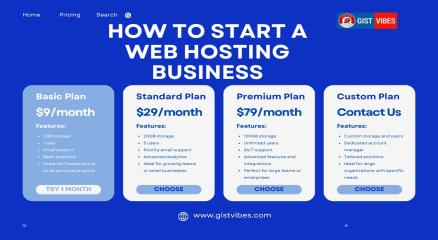
With this guide, you will know exactly how to start a web hosting company from scratch, even if you have never touched a server before. By the end, you will be able to launch your own hosting business with reseller hosting, VPS, or a dedicated server. Let’s begin. 1. Choose Your Hosting Platform There are two ways to start: Beginner method → Use Reseller Hosting Intermediate method → Use VPS Advanced method → Use Dedicated Servers If you are a beginner, use: Zenoxcloud Reseller Hosting It gives you: WHM panel cPanel for customers Free SSL Easy management No server configuration required 2. Buy Your Hosting Plan Here’s how to choose a plan: If you choose reseller hosting Pick a plan with: At least 50GB storage Unlimited cPanel accounts or reasonable limit Free SSL WHM access If you choose VPS Pick: Minimum 2–4GB RAM SSD storage One to two CPU cores cPanel/WHM licence If you choose dedicated server Pick: Minimum 16GB RAM At least 4 CPU cores 250GB+ SSD cPanel licence Once you complete payment, you will receive: WHM login link WHM username WHM password Nameservers Keep these safe. 3. Log Into WHM To Create Hosting Packages WHM (Web Host Manager) is where you create hosting plans for your customers. How to do it Open the WHM login link sent by your provider. Enter your username and password. After login, look at the left sidebar. Scroll down to “Packages”. Click “Add a Package”. You will see fields like: Disk Quota Bandwidth Max Email Accounts Max Addon Domains Fill in the details depending on your plan. Example package you can create Basic Plan Disk space: 5GB Bandwidth: 20GB Addon domains: 0 Email accounts: 5 Databases: 2 Standard Plan Disk: 10GB Bandwidth: 40GB Add-on domains: 3 Email accounts: Unlimited Premium Plan Disk: 20GB Bandwidth: 100GB Everything unlimited Scroll down Click “Add” or “Save” Your hosting plans are now created. 4. Set Up Private Nameservers Private nameservers make your hosting business look professional. How to do it Go to your domain registrar dashboard. Open the domain settings. Look for “Custom nameservers” or “Child nameservers”. Add: ns1.yourhostingbrand.com → IP Address provided by your server ns2.yourhostingbrand.com → Same IP or a second IP Save changes. Go back to WHM. Search for “Basic WebHost Manager® Setup”. Add your new nameservers there. Save. Now your hosting brand uses professional nameservers. 5. Install WHMCS For Billing And Automation WHMCS is the brain of your hosting business. It handles: Customer sign-up Payments Automatic hosting account creation Email notifications Invoices Password resets Renewals How to install WHMCS Log into your cPanel. Scroll down to the Software section. Click Softaculous Apps Installer. Search for WHMCS. Click Install. Choose the folder (usually install in /billing or root). Enter your business name. Create an admin username and strong password. Click Install. After installation, you will see: Admin URL Client login URL Setup wizard Keep these safe. 6. Connect WHMCS To WHM This is where automation happens. Steps to connect Log into WHMCS admin. Go to System Settings. Click Servers. Click Add New Server. Fill in: Server name (your hosting name) Hostname (your WHM URL) IP address Under Type, select cPanel/WHM. Enter your WHM username. Enter your API token. Go to WHM → search “API token”. Create a new API token → copy and paste it. Save changes. Now WHMCS can automatically create hosting accounts. 7. Create Hosting Products Inside WHMCS These products match the packages you created inside WHM earlier. How to do it WHMCS admin → System Settings. Click Products & Services. Click Create New Product. Choose: Type: Shared Hosting Module: cPanel Name your plan (Basic Hosting). Set price (e.g., $3/month). Go to the Module Settings tab. Select the WHM server you added earlier. Select the package name you created in WHM (Basic). Enable “Auto create account on payment”. Repeat for your Standard and Premium plans. Now your hosting business can accept payments and activate accounts automatically. 8. Set Up Support System Your hosting business needs a place where customers can ask for help. To set up support in WHMCS WHMCS admin → Support. Create departments: Technical Billing Sales Add support emails. Enable ticket system. Add live chat plugin if needed. You are now ready to support customers. 9. Build Your Hosting Website Your hosting website is what customers see. Pages you must include: Home Shared hosting Reseller hosting VPS hosting Dedicated servers Contact Login Register Terms of Service How to connect your website to WHMCS Add a “Client Area” button on your website. Link it to your WHMCS client login page. Add “Order Now” buttons on your hosting plans. Connect each button to the right WHMCS product. If you want a fully built hosting website, Gentilitybase Technology Limited can create the entire brand for you. 10. Launch Your Hosting Business Do these before launching: Final checks Test sign-up Test payment Test account creation Test welcome email Test support Test nameservers Test cPanel login Marketing ideas Promote on social media Offer discounts Partner with website designers Offer free hosting for first ten customers Run simple ads Post tutorials Consistency brings customers. Conclusion This tutorial guide shows you exactly how to start a web hosting business from scratch. With reseller hosting from Zenoxcloud, automated billing through WHMCS, proper setup inside WHM, and a professional hosting website, you can run a real hosting company even as a beginner. Your hosting business becomes stronger and more profitable as you upgrade into VPS, dedicated servers, and eventually cloud infrastructure.

Starting a web hosting business can be profitable if you build it correctly. Every website owner needs hosting, which means there is constant demand. But running a hosting company requires planning, investment, server power, and the right support tools. Many beginners think they only need one small server, but a real hosting business needs stable servers, billing systems, automation tools, backups, support, branding, and long-term maintenance. This guide on GistVibes breaks everything down in simple English with clear dollar pricing, exact calculations, and practical examples. The Major Costs In Starting A Hosting Company A hosting business has five major cost areas: Infrastructure (servers) Billing and automation software Branding and hosting website setup Support tools and management Maintenance and monthly running cost Let’s break each one down with real values. Infrastructure Cost This is the backbone of your hosting business. You can start with three main options: 1. Reseller Hosting (Beginner Friendly) A reseller hosting plan lets you sell hosting under your brand without running the server yourself. Zenoxcloud.net Reseller Hosting (Recommended) Zenoxcloud offers reseller hosting suitable for beginners. Typical price range: Starter reseller: $10 – $20 per month Business reseller: $20 – $40 per month Advanced reseller: $40 – $70 per month What you can get: Custom cPanel accounts WHM dashboard Email hosting Free SSL for clients High uptime Fast servers Ideal For: Beginners who want a low-risk, low-maintenance way to start hosting. Estimated yearly cost If you choose a $20/month plan: $20 × 12 months = $240/year If you choose a $40/month plan: $40 × 12 = $480/year 2. VPS Server (Medium Size Hosting Business) A VPS gives you dedicated RAM, CPU, and storage. Price range: Small VPS: $20 – $40/month Medium VPS: $50 – $90/month Large VPS: $100 – $200/month Example: If you choose a $60/month VPS: $60 × 12 = $720 per year Suitable for: Web designers hosting client sites Hosting companies with 20 – 150 clients Medium performance hosting packages 3. Dedicated Server (Professional Hosting Companies) Dedicated servers give you full control, powerful resources, and high stability. Price range: Basic server: $150 – $200/month Business level: $250 – $400/month High performance: $500 – $1,000+/month Example: If you buy a $250/month server: $250 × 12 = $3,000/year High-end example: If you buy a $500/month server: $500 × 12 = $6,000/year Dedicated servers are best for: Large hosting resellers Corporate hosting High-traffic websites Advanced ecommerce platforms 4. Cloud Hosting Infrastructure (Enterprise Level) If you want to build a serious hosting company like the top brands, you need cloud infrastructure. Price range: Basic cloud setup: $300 – $600/month Medium cloud setup: $800 – $1,500/month Large enterprise cloud: $2,000 – $10,000+/month This option is only for large companies. Billing System And Automation Cost You need a billing system to manage: Hosting accounts Payments Subscription renewals Email notifications Client dashboards Domain orders Most hosting companies use WHMCS. WHMCS Pricing (Realistic) Starter license: $18 – $25/month Plus license: $30 – $40/month Professional license: $45 – $70/month Yearly calculation example: Using a $25/month license: $25 × 12 = $300/year Using a $45/month license: $45 × 12 = $540/year Branding And Hosting Website Setup Cost To attract customers, you need: A professional hosting homepage Pricing tables Domain search integration WHMCS integration Login & register pages Fast-loading design Clean branding and logo Cost Breakdown Logo design: $20 – $100 Hosting website design: $100 – $400 WHMCS theme integration: $50 – $150 Extra landing pages: $10 – $30 each Example Total Branding Cost A normal hosting company setup might cost: Logo ($40) Hosting website ($150) WHMCS integration ($100) Extra pages ($50) Total estimated branding cost = $340 Customer Support And Management Cost Hosting requires support because customers will always ask: How to connect a domain Why their site is slow How to set up email How to use cPanel You need: Live chat tool Ticket system Support availability Support Cost Basic support tool: $10 – $20/month Premium support tool: $30 – $50/month Hiring part-time support staff: $50 – $120/month Hiring full-time technical staff: $200 – $500/month Example: Basic setup using: Chat tool ($15/month) Ticket system ($20/month) Yearly: ($15 + $20) × 12 = $420/year Backup Systems And Security Cost Customers expect their data to be safe. You need: External backup storage Anti-DDoS protection Firewall Malware protection Cost Breakdown Backup storage: $10 – $40/month Extra security tools: $20 – $80/month Example yearly cost: If you spend $30/month on backups: $30 × 12 = $360/year Total Startup Cost Calculation Here are realistic examples: Low Budget Hosting Business (Reseller Hosting) Reseller hosting: $20/month Billing system: $25/month Branding: $200 (one-time) Support tools: $20/month Monthly cost: $20 + $25 + $20 = $65/month Yearly cost: ($65 × 12) + $200 branding = $980 total yearly cost Perfect for beginners. Medium Budget Hosting Business (VPS) VPS server: $60/month Billing system: $25/month Branding: $300 one-time Backups: $20/month Support tools: $20/month Monthly cost: $60 + $25 + $20 + $20 = $125/month Yearly cost: ($125 × 12) + $300 = $1,800 total yearly cost High Budget Hosting Business (Dedicated Server) Dedicated server: $250/month Billing: $40/month Security: $30/month Backups: $40/month Support staff: $100/month Branding: $400 one-time Monthly cost: $250 + $40 + $30 + $40 + $100 = $460/month Yearly cost: ($460 × 12) + $400 = $5,920 total yearly cost Enterprise Level Hosting Business (Cloud Infrastructure) Costs can reach: $2,000 – $10,000/month depending on size Full setup could exceed $100k yearly This is for large brands. Recommended Tools For Starting Your Hosting Business Zenoxcloud Hosting Zenoxcloud offers: Reseller hosting Shared hosting VPS Business hosting Fast uptime Affordable plans Perfect for beginners and mid-level hosting businesses. Gentilitybase Technology Limited They can build: Hosting website WHMCS integration Automation setup Branding Dashboards Landing pages They help you launch your hosting business quickly and professionally. Conclusion Starting a hosting business can be a powerful income stream if you invest correctly. Whether you begin with a simple reseller plan or a full dedicated server, the key is understanding your running costs, choosing the right tools, and delivering reliable support. With the right setup, your hosting business can grow from a small reseller operation into a large infrastructure company over time.
Creating a website today is one of the smartest investments any person or business can make. But before starting, you must understand the true cost of website creation — not just what you pay the developer, but also the long-term expenses that keep the website alive. Many people enter website projects blindly. Some think everything should be cheap, while others overpay for basic things. The truth is simple: your website cost depends on what you want to build, the resources you need, the size of your business, and the type of users you expect. This complete guide on GistVibes breaks down every part of website cost using simple English, practical examples, and realistic price ranges. Domain And Hosting Cost Before a website can exist, you must pay for two important things: A domain name A hosting plan These two are the foundation of every online project. Domain Cost A domain is your online identity. It is the digital address people type to reach you: yourbusiness.com, yourstore.net, yourbrand.org, etc. Realistic pricing: Standard domains: $13 – $25 per year Premium domains: $50 – $500+ per year Highly competitive words can go into thousands of dollars, especially short names. Factors that affect price: The extension you choose (.com, .net, .store) How unique the name is Demand for the keyword Important: A domain is not a one-time payment. You renew it every year. Web Hosting Cost Hosting is where your website lives. It is the online “house” that stores your data, images, pages, and files. Hosting prices depend on resources like: RAM CPU power Storage space Bandwidth Security level Hosting price breakdown: Basic Hosting (for small websites) Cost: $17 – $60 per year Best for blogs, portfolios, CV sites, small business websites Features: small space, lower performance, basic security Mid-range Hosting (for growing websites) Cost: $80 – $180 per year Best for medium businesses, bigger blogs, corporate websites Features: faster speed, more space, better uptime, improved security High-end Hosting / VPS / Cloud Hosting Cost: $200 – $600+ per year Best for high-traffic websites, ecommerce stores, portals Features: dedicated resources, faster processing, strong security Dedicated Servers (for big businesses) If you are planning a large platform such as: e-commerce with thousands of products school portal media website booking system streaming service finance or membership system Then you need a server. Realistic cost: $200 – $800 per month Super high-end servers can reach $1,500+ monthly Servers provide: Full control High RAM High CPU Custom security Handle massive traffic Recommended Hosting: Zenoxcloud.net For users who want something simple, reliable, and affordable, Zenoxcloud.net is a strong option. They offer: Shared hosting Cloud hosting Business hosting Good support Clear pricing Fast servers Perfect for beginners, startups, and medium businesses. Website Design And Development Cost Website development is the most flexible part of your budget. The price depends on what you want the site to do, the pages needed, and the complexity of the features. Below is a human-friendly breakdown. Basic Business Website These websites typically include: Home About Services Contact Gallery or Portfolio Price Range: $50 – $300+ depending on quality, design style, and content. Suitable for: Small companies Entrepreneurs Freelancers Corporate profiles Blog Or News Website A blog requires: Category system SEO structure Post layout Fast loading Image optimization Price Range: $80 – $350+ depending on customization and features. Perfect for: Writers News brands Lifestyle bloggers Tech or entertainment platforms E-commerce Website This is where real development work begins. Features needed: Product pages Checkout system Payment integration Inventory Cart features User accounts Order management Email automation Price Range: $300 – $1,200+ depending on size and complexity Custom Web Systems Custom projects require heavy development hours. These include: School portals Marketplace platforms Learning management systems Booking or rental systems Membership platforms Financial dashboards Multi-vendor ecommerce Price Range: $500 – $5,000+ depending on features, security, and scalability. Recommended Developer: GentilityBase Technology Limited If you want: A professional website Clean design Smooth user experience Long-term support Affordable pricing Fast delivery Then GentilityBase Technology Limited is a reliable and trusted company. They develop: Business websites Online stores Blogs Corporate systems Custom dashboards Portals They also guide clients from start to finish. Content Creation Cost No website is complete without content. Content includes: Written text Product descriptions Blog articles Graphics Images Videos Banners SEO-optimized pages Price Range: $10 – $50 per page depending on quality Graphic design: $5 – $50 per banner Video content: varies Good content increases trust and improves search engine ranking. Maintenance And Yearly Running Cost After building the website, maintenance becomes important. Maintenance involves: Domain renewal: $13 – $25 yearly Hosting renewal: $17 – $200+ yearly Plugin updates Security updates Theme updates Fixing errors Speed optimization Backup management For simple sites: $20 – $150 yearly For complex sites: $200 – $1,000 yearly Marketing And Promotion Cost A website needs visibility. Marketing helps attract visitors. Marketing strategies include: SEO Paid ads Social media promotion Branding Email campaigns Content marketing Costs vary based on your growth goals. Small budget: $20 – $100 monthly Medium budget: $150 – $500 monthly High budget: $1,000+ monthly Step By Step Website Building Tutorial This is a beginner-friendly guide. 1. Choose your domain Pick a short, clear, memorable name. Budget: $13+ yearly 2. Select hosting Choose your plan based on your website size. Budget: $17 – $200+ yearly High-end servers: $200+ monthly 3. Install your platform Most beginners choose WordPress because it is simple. 4. Pick a theme Choose a design template and customize it. 5. Create your important pages Home, About, Contact, Services, Blog, Privacy. 6. Upload your content Write your text, upload images, add graphics. 7. Optimize your website Check mobile view, speed, and SEO. 8. Launch and promote Share on social media, use SEO, and start posting. Conclusion The real cost of building a website depends on the scale of your project, the hosting quality, the features you want, and the long-term maintenance you choose. With clear planning, you can create a website that fits your budget and grows with your business. For hosting, Zenoxcloud offers strong and flexible plans. For development, Gentilitybase Technology Limited provides professional, clean, and reliable web design services. Building a website is not expensive when you understand what you are paying for — and with the right team, your website can become a powerful asset for your brand.

A lot of people prefer streaming movies online without creating an account or filling long forms. The good thing is that there are trusted platforms you can open on your browser and start watching instantly. These platforms are simple to use, easy to navigate, and work on phones, tablets, and computers without any setup. This guide on GistVibes highlights some of the best free online platforms you can start using right away. Tubi Tubi is one of the most popular free online movie platforms that require no sign up to start watching. It has a very large library covering action, comedy, romance, thrillers, family films, and classic titles. Its clean layout makes everything easy to find, and the movie collection is updated often, so the content always feels fresh and lively. Pluto TV Web Pluto TV has a web version where users can enjoy free streaming without signing in. It offers a mix of live channels and on-demand movies directly through the browser. There are many genres to pick from, and its simple website design makes browsing feel natural and relaxed. Crackle Crackle gives users access to free movies online without asking for an account. It offers action films, comedies, thrillers, and classic stories, plus a few originals. The site updates its movie list from time to time, keeping the experience fresh for returning viewers. Freevee Web Freevee has a web-based platform where viewers can enjoy free movies supported by adverts. The streaming works smoothly on any browser, and there is no need to create an account. Its movie selection includes new picks and older favourites, making it a simple and comfortable place for free entertainment. Plex Free Movies Web Plex also has a web version for free movies that does not require sign up. The platform focuses on independent films, documentaries, and classic titles. It’s an easy place to explore if you enjoy discovering something different. FilmRise FilmRise provides a straightforward browser experience with a wide range of free movies. Everything can be played instantly without logging in. The platform is especially known for its classic films, documentaries, and timeless stories. Vudu Free Movies Web Vudu’s free category can be accessed directly from the browser, and users don’t need an account to watch. The platform has a steady mix of modern films, classic picks, dramas, and comedies. Its layout is easy to navigate, making it convenient for quick online streaming. YouTube Free Movies Section YouTube offers a free-to-watch movie section filled with licensed films across different genres. Viewers can open the movie page and start watching instantly with no sign up required. It’s also updated regularly, so there’s always something new to check out. Peacock Free Tier Web Peacock has a free online section where users can watch selected movies without creating a full account. The movie list rotates from time to time, offering a mix of classic favourites and recent releases. The Roku Channel Web Version Even though the name suggests TV, The Roku Channel also has a full web version that works directly in a browser. It allows users to watch free movies instantly without signing in. The collection includes dramas, comedies, action films, and older classics, making it a strong option for online viewing. Conclusion If you enjoy watching movies online without creating an account, these platforms offer some of the simplest and most comfortable experiences. They work directly on your browser, load quickly, and provide a wide mix of films across different genres. Whether you want something classic or something new, you can enjoy free entertainment without stress or complicated steps.

AliExpress and Temu dominate the talk around low cost online shopping. Both promise wide choice and easy delivery across borders, but real buyers care about more than catchy prices. They want speed, quality, fair refunds, and a smooth experience from the first click to the final delivery. GistVibes guide looks beneath the surface so you can decide which one fits your style and budget. AliExpress and Temu Comparison Table Category AliExpress Temu GistVibes Analysis Platform maturity Older marketplace with many long standing stores Newer platform growing fast Experience helps with trust and dispute structure Product range Very broad across gadgets fashion home tools and more Wide but tilted toward trendy low cost items Range favors AliExpress while Temu focuses on viral goods Pricing style Seller based pricing with seasonal coupons App driven discounts flash deals and bundles Temu often shows lower upfront totals but watch quality and specs Delivery speed Usually two to four weeks faster from regional warehouses Estimates can look short but vary by batch shipping Consistency leans to AliExpress while headline speed often favors Temu Quality control Relies on store ratings reviews and buyer photos Relies on central curation with mixed results Transparency of seller history is stronger on AliExpress Refunds and disputes Structured buyer protection but resolution can take time Easy app claims for simple cases but uneven by region For complex disputes AliExpress is steadier for quick freebies Temu can feel faster Customer support Mix of chat bots dispute center and store messaging In app support tickets with push notifications Both rely on automation human review appears later Trust and safety Payment is escrowed until you confirm delivery Promos and pre applied coupons push fast decisions AliExpress feels safer for high value buys Temu works for small impulse orders User experience Detailed listings filters and deep review history Very simple mobile first layouts with gamified deals New shoppers may find Temu easier power users may prefer AliExpress filters Best fit Resellers patient buyers and anyone who values reviews Bargain hunters trend shoppers and gift buyers Choose based on your tolerance for wait times and quality swings Pricing and hidden costs explained Low price tags often hide the real total. On AliExpress, different stores sell the same item with different shipping fees, so the final price changes at checkout. On Temu, app coupons and bundle offers cut the total sharply, but some items ship from farther locations, which can slow delivery. Watch for add-ons like return postage, customs collection by the courier, or size exchanges that are not free. How shipping really works behind the scenes Both platforms rely on long haul consolidation. Orders travel in bulk before they enter local courier networks. AliExpress has many sellers who use standard tracked lines and regional warehouses, which brings steadier time frames. Temu uses central planning and bulk flights that can be very fast when lanes are open and slower when capacity is tight. For the fastest experience on either platform, look for items marked as local warehouse or regional stock and avoid made to order listings. Quality control and listing accuracy AliExpress lets you compare multiple stores for the same product and read long review trails with buyer photos. That history helps you judge sizing, materials, and packaging. Temu simplifies the page and pushes the deal value, which is friendly for quick decisions but gives fewer deep details. If specification accuracy is critical for you, the transparent review depth on AliExpress is a real advantage. If you are buying simple accessories or seasonal decor, Temu’s quick picks may be fine. Refunds returns and real timelines AliExpress approach You open a dispute if an item arrives late or not as described. The platform may ask for photos or a short video. Refunds land after the case closes or when the seller accepts your claim. Return labels depend on the store policy and the item value. Temu approach In app claims are straightforward for missing parts or damaged goods. Some returns are free within a short window, others require you to cover postage. Quick credits appear for low value claims while higher value reviews may take longer. For small issues Temu can feel faster. For complex cases or high value electronics, the step by step structure on AliExpress provides clearer rules. Search filters and discovery AliExpress offers granular filters such as material, plug type, voltage, model year, and shipping options. This is helpful when you know exactly what you want. Temu focuses on curated themes like home refresh or beauty picks with strong visual cards. If you enjoy browsing and discovering trends, Temu shines. If you are comparing technical specs, AliExpress wins. Payment security and currency comfort Both platforms keep your card details behind secure gateways. AliExpress often shows prices in multiple currencies and lets you switch easily. Temu is built for one tap mobile checkout with heavy use of wallet credits and coupons. If exchange rate clarity matters to you, confirm the currency at checkout and take screenshots for your records. Suitability for reselling and dropshipping AliExpress is popular with resellers because stores offer variant control, bulk price tiers, and consistent restocking. Temu’s prices can be lower for first purchases, but listings change quickly and restock patterns are less predictable. If you run a small online shop and need steady repeat orders, AliExpress is usually the safer partner. For one off seasonal flips, Temu discounts can be attractive. Sustainability and packaging Expect lightweight packaging from both platforms. AliExpress sellers vary widely; some use padded mailers while others box fragile items well. Temu’s bulk approach reduces per item materials but may still use multiple plastic sleeves inside. If eco impact matters to you, message the store on AliExpress to request minimal packaging and combine shipments where possible. Red flags to watch before you buy Titles that promise premium materials at unusually low prices Listings with only studio photos and no buyer images Shipping lines that show no scans after the first week Stores that refuse to answer basic questions about size or compatibility Return policies that require international postage for clearly defective goods Smart buyer tips from GistVibes Shortlist three listings then compare total price after shipping and coupons Read the most recent reviews first since quality can change by batch Order one sample before a big purchase Use tracked shipping even if it costs a little more Keep all order messages inside the platform for dispute proof Who should choose AliExpress Buyers who value detailed reviews, consistent restock, and transparent seller history. Ideal for accessories, tools, parts, and items where specifications matter. Who should choose Temu Shoppers chasing the lowest price for simple goods, gifts, home decor, and fashion basics who are comfortable changing stock and occasional quality swings. Conclusion Both platforms open doors to global deals, but they reward different shopping styles. If you care about reliability and deep reviews, AliExpress fits better. If you love steep discounts and quick scrolling on mobile, Temu delivers the thrill of the bargain hunt. For GistVibes readers, the winning platform is the one that matches your patience level, your quality needs, and the purpose of your purchase.

In today’s digital world, more people are turning to online business as a way to earn money and gain freedom. One of the most popular models for beginners is dropshipping — a method where you sell products online without holding any physical inventory. It’s simple to start, but success requires strategy, discipline, and the right mindset. For readers of GistVibes, this guide explains everything you need to know to start and grow a profitable dropshipping business in 2025 and beyond. Understanding What Dropshipping Really Is Dropshipping is an e-commerce model where you sell products directly to customers, but your supplier handles storage, packaging, and shipping. You act as the bridge between the supplier and the buyer. This means you don’t need to buy stock upfront or manage a warehouse — instead, you focus on marketing, branding, and customer experience. The idea is to make a profit by selling products for more than what you pay the supplier. It’s a business of smart choices and trust. Your success depends on how well you pick products, attract customers, and partner with reliable suppliers. Step 1: Choose the Right Niche The first and most important step is finding a niche — a focused area of products with strong demand but limited competition. The best niches are built around real interests and needs. Examples include: Home improvement and lifestyle gadgets Beauty and skincare accessories Fitness and wellness products Pet care essentials Tech gadgets and accessories Avoid overly saturated markets. Instead, look for products that solve small but real problems. Step 2: Find Reliable Suppliers Your supplier is the heart of your dropshipping business. Choose carefully — late deliveries or poor-quality products can destroy your reputation. Many entrepreneurs use trusted supplier platforms where they can connect directly with manufacturers offering fast shipping and verified quality. Before committing, test samples to check product quality, packaging, and delivery time. The goal is to make sure what your customers receive reflects your brand promise. Step 3: Build Your Online Store A clean, easy-to-navigate website can make or break your business. Whether you use Shopify, WooCommerce, or any other platform, focus on: A professional design with a clear brand name and logo Simple product categories for easy browsing High-quality images and honest descriptions Mobile-friendly layout for users on phones Add clear return policies, contact details, and trust badges to make visitors feel safe buying from you. Step 4: Craft a Winning Marketing Plan Once your store is live, marketing becomes your main job. Dropshipping success is not about luck — it’s about visibility. You can use: Social Media Ads: Promote products on Facebook, TikTok, and Instagram with targeted campaigns. Influencer Marketing: Partner with small influencers who can show your products to loyal audiences. Search Engine Optimization: Write useful blog posts or guides that help customers find you through Google searches. Email Marketing: Offer discounts or updates to returning visitors to keep them engaged. Your goal is to attract steady traffic, build brand trust, and convert visitors into buyers. Step 5: Focus on Customer Experience Dropshipping can be competitive, but one thing always stands out — how you treat your customers. Respond to messages quickly. Offer tracking updates for every order. Be honest about delivery times. Handle refunds politely and professionally. Happy customers become repeat buyers and your best promoters. Step 6: Analyze, Improve, and Grow Every successful dropshipper watches data carefully. Use analytics tools to see what products sell best, where your traffic comes from, and which ads bring real results. Remove products that don’t sell and double down on your best performers. Try different prices, ad creatives, and bundles. Continuous testing and learning will keep your store profitable in the long term. Common Mistakes to Avoid Selling everything to everyone (stay focused on your niche). Ignoring supplier performance. Overpricing items without adding value. Neglecting branding — customers remember identity, not random sellers. Avoid these pitfalls and your business will grow stronger over time. Conclusion Dropshipping is not a get-rich-quick scheme — it’s a business that rewards smart thinking and patience. When done right, it can turn into a sustainable source of income and independence. For GistVibes readers dreaming of starting an online business, now is the time to take action. Begin small, learn fast, and focus on long-term value. With consistency, transparency, and quality, your dropshipping store can become the next big success story.

Understanding What A Social Media Niche Means In the world of social media, a niche simply means your area of focus — the specific topic, theme, or interest you consistently create content about. It’s what helps your followers and potential brands quickly understand who you are, what you stand for, and what kind of content they can expect from you. Instead of posting random topics every day, a niche keeps your content focused, clear, and attractive to a specific audience. For example: A fashion influencer talks about style, outfits, and beauty. A fitness creator shares workout tips and healthy lifestyle advice. A travel blogger posts about destinations and adventures. A tech content creator reviews gadgets and apps. Your niche is what makes you recognizable and sets you apart from millions of others online. Why Choosing A Niche Matters So Much Picking a niche is not just about organizing your content — it’s about defining your identity and purpose on social media. When you have a clear niche: Your followers know exactly what to expect from you. Brands can easily identify if you fit their campaigns. Your content starts ranking better on platforms like Instagram, TikTok, and YouTube. You attract loyal, engaged followers who actually care about your posts. Without a niche, your page may look confusing, inconsistent, or scattered — making it hard to build trust or earn income from sponsorships and AdSense. Step One: Know What You’re Passionate About The first key to choosing the right niche is finding what you truly enjoy doing or talking about. Ask yourself: What do I love sharing even when I’m not paid for it? What topics can I talk about for hours without getting tired? What problems can I help others solve with my knowledge? If you’re passionate about something, creating content around it will feel natural — not forced. Example: If you love skincare and beauty, your niche could be beauty tips and product reviews. If you enjoy gadgets and apps, your niche could be tech and digital tools for beginners. Step Two: Identify What People Are Searching For A niche should not only be something you love — it should also have demand. Use tools like: Google Trends – to see what topics are trending. Instagram and TikTok search – to check what people engage with. YouTube autocomplete – to find popular search phrases. You want a niche that balances your passion with what people are actively looking for. For instance, “personal development” might have more audience reach than “ancient Greek philosophy.” So, combine passion with popularity — that’s the secret to finding a profitable niche. Step Three: Define Your Target Audience Every niche serves a specific group of people — your target audience. Knowing who you’re speaking to helps you create content that resonates and engages. Ask yourself: Who would benefit most from my content? What age range or profession do they belong to? What are their main problems or goals? Example: If your niche is fitness, your audience might be young adults trying to stay in shape. If your niche is business motivation, your audience could be entrepreneurs or freelancers. Once you define your audience, you’ll know how to talk to them — what tone, format, and content they respond to best. Step Four: Study Competitors In Your Niche No matter what niche you pick, others are already doing it. That’s not a problem — it’s an opportunity. Study what successful creators in your niche are doing: What kind of posts get the most engagement? How do they write captions or film videos? What hashtags do they use? Then, identify what’s missing in their content — and fill that gap with your own unique approach. For example, if many influencers focus on “makeup tutorials,” you could focus on “affordable makeup hacks for beginners.” Your uniqueness makes your niche stand out. Step Five: Choose One Main Niche And Support It With Subtopics While it’s good to have variety, don’t spread too wide. Start with one clear main niche and a few related subtopics. Example: Main niche: Fitness Subtopics: Nutrition, mental wellness, workout gear reviews Main niche: Fashion Subtopics: Style inspiration, thrift shopping, beauty hacks Main niche: Tech Subtopics: Smartphone reviews, AI tools, app tutorials This helps you stay consistent while keeping your content dynamic and interesting. Step Six: Test And Observe What Works Best Sometimes, your perfect niche will find you — not the other way around. As you create content, pay attention to: Which topics get the most engagement. What your followers comment about or request more. What makes you feel most confident to share. After a few weeks, you’ll see a pattern — that’s your sweet spot. Stick with it and keep improving. Step Seven: Build A Brand Around Your Niche Once your niche is clear, start turning it into a personal brand. That includes: Consistent colors, tone, and content style. A memorable name or tagline that represents your niche. Using your niche keywords in your bio, captions, and hashtags. For instance, if your niche is healthy living, use terms like “wellness,” “fitness,” or “clean diet” consistently across your profile. And if you want to strengthen your personal brand with a blog or influencer website, GistVibes can help you build it professionally, ready for AdSense and sponsorships. Step Eight: Stay Flexible And Keep Evolving Your niche can evolve as you grow. Maybe you start with beauty tips but later expand into lifestyle or business. That’s perfectly fine — growth is part of the journey. Just make sure your new direction still connects with your audience and stays true to your core message. Consistency builds identity, and identity builds influence. Final Thoughts A niche isn’t just a category — it’s your online fingerprint. It defines your value, direction, and the kind of people who follow and support you. When you choose the right niche, content creation becomes easier, brand collaborations increase, and income flows more consistently. So, take your time, experiment, and grow with intention. And when you’re ready to expand your brand professionally, GistVibes can help design your niche-based blog or influencer website, fully optimized for AdSense and brand deals.

Understanding Social Media Influencing And Why It Works Social media influencing has become one of the most powerful ways to earn money and build a strong personal brand in today’s digital world. It’s not just about posting pictures or videos — it’s about creating meaningful content that connects with people and inspires action. Influencers shape opinions, trends, and buying decisions every single day. From fashion to tech, travel to fitness, and lifestyle to beauty — social media influencing gives you the power to reach millions with a single post. Whether you’re on Instagram, TikTok, YouTube, or X (Twitter), you can turn your passion into profit. And if you need help creating a blog or influencer website to strengthen your brand, GistVibes can help you build and optimize it for AdSense and sponsorships. Step One: Understand The Role Of A Social Media Influencer A social media influencer is someone who uses their online presence to promote products, services, or ideas to their followers. Brands collaborate with influencers because people trust real voices more than traditional ads. When you recommend something, your audience sees it as advice from a friend, not a corporate message. To become a successful influencer, you must build trust, consistency, and a personal identity that aligns with your audience’s interests. Step Two: Choose Your Niche And Define Your Voice Every influencer starts with a niche — an area of focus where you share valuable, consistent content. Popular influencer niches include: Fashion and Beauty Fitness and Wellness Travel and Lifestyle Food and Cooking Technology and Gadgets Business and Motivation Entertainment and Media Choose a niche that matches your passion. When you talk about what you truly enjoy, your content becomes natural and engaging. Step Three: Build A Strong And Attractive Social Media Profile Your profile is your online business card. It’s what people see first before deciding to follow you. Make sure your profile includes: A clear profile picture that represents your personal brand. A short and powerful bio that tells people what you offer. Consistent colors, fonts, and content style. Links to your website, blog, or YouTube channel. A clean, organized profile instantly builds credibility and attracts brands looking for partnerships. Step Four: Create Valuable And Engaging Content Good content is the heart of social media influencing. You don’t need to post daily — but when you do, make sure it’s something that adds value. Ideas for high-performing content: Tutorials and how-tos related to your niche. Honest product reviews and recommendations. Behind-the-scenes videos showing your daily routine. Inspirational posts that connect emotionally. Educational posts that solve audience problems. Mix your content with photos, short videos, reels, and carousels to keep it dynamic. Consistency builds familiarity — and familiarity builds trust. Step Five: Grow Your Audience Naturally It’s not about having millions of followers — it’s about having an engaged community. Ways to grow your audience: Interact with followers through comments and DMs. Collaborate with other influencers in your niche. Use trending hashtags related to your topic. Post at times when your audience is most active. Share stories, live videos, and reels frequently. Avoid fake followers or paid engagement — brands can easily detect that. Authentic growth is always better for long-term success. Step Six: Partner With Brands And Earn Income Once your content and audience start to grow, brands will notice you. Some might approach you directly, while others you’ll reach out to through influencer platforms or email. Ways influencers earn include: Sponsored posts or videos. Brand ambassador deals. Affiliate marketing partnerships. Product reviews and shout-outs. Selling digital products or courses. When reaching out to brands, share your audience insights, engagement rate, and examples of previous collaborations — that’s what convinces them to work with you. If you want to showcase your work professionally, GistVibes can help you build a personal influencer portfolio website that highlights your stats and collaborations beautifully. Step Seven: Promote Brands Authentically The golden rule of social media influencing is authenticity. People follow you because they trust your taste, honesty, and lifestyle — don’t break that trust. To promote authentically: Only endorse products you personally like or use. Explain why you recommend it and how it helps. Use your real voice; don’t sound like an ad. Include disclaimers like “paid partnership” when needed. The more transparent you are, the stronger your connection with your audience — and the more brands will want to work with you. Step Eight: Monetize Beyond Brand Deals Social media influencing opens many income streams beyond brand promotions. You can: Start your own product line or merchandise. Offer digital courses or coaching sessions. Write ebooks or guides. Use AdSense or TikTok Creator Fund to earn from content views. By combining multiple income sources, you can create a steady, reliable income flow from your influence. And if you want a custom-built influencer blog with AdSense integration, GistVibes can design it for you from scratch, helping you earn even more from your online presence. Step Nine: Stay Consistent And Keep Improving The influencer world changes fast. New trends, new platforms, new content styles — everything evolves. Stay ahead by learning constantly, trying new content formats, and listening to your audience’s feedback. Don’t be discouraged by slow growth; even top influencers started small. Your goal is not just to gain followers but to build a community that listens, trusts, and supports you. Final Thoughts Becoming a social media influencer isn’t luck — it’s strategy, creativity, and consistency. You don’t need fame to earn; you just need focus and an authentic message that connects. When your influence grows, brands come naturally — and your income becomes steady. If you’re ready to take that step, GistVibes can help you design your personal brand site, optimize it for AdSense, and guide your digital growth journey.

Understanding What Freelancing Really Means Freelancing simply means working independently rather than being employed by a single company. As a freelancer, you get to offer your skills and services to multiple clients and get paid per project or task. This form of work has exploded in popularity because it offers flexibility, freedom, and control over your time. From writing and design to web development and marketing, freelancing gives you the power to turn your skills into a source of consistent income — all from home. Whether you want to work part-time or build a full-time career, freelancing opens up countless opportunities to grow, learn, and earn online. Step One – Identify Your Marketable Skill Before you start freelancing, the first step is to identify what you can offer. A marketable skill is something people are willing to pay for. Some common examples include: Writing and content creation Graphic design Web or app development Social media management Virtual assistance Video editing SEO and digital marketing If you don’t already have a strong skill, don’t worry. You can learn one through free or affordable online courses. The key is to choose something you enjoy doing and can improve at with practice. Step Two – Build A Strong Portfolio Your portfolio is your professional showcase — it’s what potential clients look at to decide if they should hire you. Even if you’re new, you can build a solid portfolio by creating sample projects that highlight your abilities. For example: Writers can create blog articles. Designers can design logos or flyers. Developers can build demo websites. Make sure your samples look professional and reflect the kind of work you want to get paid for. A clean and confident portfolio can make a big difference when applying for jobs. Step Three – Choose The Right Freelance Platforms There are many platforms where freelancers find clients easily. These platforms act as marketplaces connecting businesses and professionals. Some popular options include sites that allow beginners and professionals to register, build a profile, and apply for projects in their niche. When setting up your profile, use a clear photo, write a professional bio, and highlight your best skills. Be polite and detailed in your proposals — clients appreciate freelancers who communicate well and understand their needs. Step Four – Learn How To Write Winning Proposals When you apply for a freelance job, your proposal is your chance to stand out. It’s like your job application letter. Here are some tips: Start with a friendly greeting. Show that you’ve read and understood the client’s needs. Explain briefly how you plan to complete the job. Include samples of your work if relevant. End with a polite closing and an invitation to discuss further. Avoid sending generic messages. Clients prefer freelancers who take the time to write personalized proposals that match their project. Step Five – Communicate Professionally With Clients Professionalism is one of the strongest qualities of a successful freelancer. Always communicate clearly, respond on time, and deliver work before deadlines. If you encounter any challenges, inform your client early — honesty builds trust. Remember, satisfied clients can become long-term partners who keep giving you more work and even refer you to others. Good communication, reliability, and integrity are what turn one-time projects into lasting relationships. Step Six – Manage Your Time And Workload Freelancing gives you freedom, but it also demands discipline. You must learn how to balance multiple projects, meet deadlines, and still maintain quality. Create a daily or weekly schedule that includes work time, rest, and self-improvement. Tools like calendars or to-do apps can help you stay organized. Managing your time well allows you to deliver on time, maintain a good reputation, and enjoy the benefits of freelancing without stress. Step Seven – Grow Your Brand And Earnings Once you’ve gained experience, you can start raising your rates and building your personal brand. Share your achievements on social media and professional networks to attract more clients. Consider building a personal website to display your work and testimonials. Over time, you’ll develop a reputation that brings clients directly to you — no more hunting for jobs daily. Continuous learning is also important. The freelance industry changes fast, and those who stay updated with new tools and skills earn more and grow faster. Final Thoughts Freelancing is more than a job — it’s a lifestyle of independence and creativity. With patience, skill, and professionalism, anyone can succeed in it. Start with one project, do your best, learn from feedback, and stay consistent. Every freelancer begins small, but those who persist eventually build thriving online careers. Your success as a freelancer depends on one thing: your commitment to growth and excellence.

Introduction In a major stride toward reducing youth unemployment and promoting entrepreneurship, the Federal Government of Nigeria has unveiled the Youth Economic Intervention and De-Radicalization Programme (YEIDEP) 2025 — an ambitious youth empowerment initiative that offers non-repayable grants ranging from ₦50,000 to ₦500,000 to eligible Nigerian youths. The program is a strategic effort to revive small businesses, support startups, and empower young Nigerians with the capital, skills, and resources needed to create sustainable livelihoods. It also aims to counter youth restiveness, encourage innovation, and stimulate economic growth across all states. About YEIDEP 2025 The Youth Economic Intervention and De-Radicalization Programme (YEIDEP) was designed to provide both financial support and entrepreneurial training to Nigerian youths between the ages of 18 and 35. It focuses on economic inclusion, job creation, and the rehabilitation of vulnerable youths, especially in communities affected by poverty, insecurity, and unemployment. Through YEIDEP, the government hopes to build a strong base of independent young entrepreneurs who can drive innovation and contribute to national development. Grant Amount and Categories Each beneficiary of YEIDEP 2025 will receive a non-repayable business grant within the range of ₦50,000 to ₦500,000, depending on the strength of their business idea and category of application. Grant Categories: Starter Grant (₦50,000 – ₦100,000) For applicants with fresh business ideas or newly trained youths who need funds to launch small ventures. Micro-Enterprise Grant (₦150,000 – ₦300,000) For young entrepreneurs who already operate small businesses but need funds to expand or restock. Growth Grant (₦350,000 – ₦500,000) For established youth-led enterprises with proven potential to scale and create jobs for others. Detailed Requirements and Eligibility Criteria To be eligible for the YEIDEP 2025 Grant, applicants must meet the following conditions: 🇳🇬 Nationality: Must be a Nigerian citizen. 🎂 Age Requirement: Between 18 and 35 years old at the time of application. 🆔 Identification: Must possess a valid National Identification Number (NIN) and Bank Verification Number (BVN). 🏢 Business Idea or Enterprise: Must have a viable business idea, startup, or existing business in operation. 🧾 Business Sector: Should fall within the government’s priority sectors, such as: Agriculture and Agribusiness Information & Communication Technology (ICT) Fashion and Beauty Industry Creative Arts & Entertainment Renewable Energy & Environmental Management Retail, Commerce & Logistics Education and Training 🧠 Willingness to Learn: Applicants must be willing to participate in entrepreneurship and financial literacy training. 💼 Bank Account: Must have or be willing to open an account with with Lotus Bank, Keystone Bank, or Fidelity bank for disbursement. How to Apply for YEIDEP 2025 Grant Follow these detailed steps carefully to submit your YEIDEP application successfully: Step 1: Visit the Official Application Portal Applicants should visit the designated YEIDEP registration portal (officially announced by the Federal Government). Make sure you are on the legitimate government platform before submitting your details. You can follow this official government portal by clicking here www.yeidep.org Step 2: Create Your Application Profile Provide your: Full name (as it appears on your BVN) Email address and phone number NIN and BVN details Date of birth and gender State and Local Government of Origin Business name or proposed business idea Step 3: Upload Required Documents Upload clear copies of: A recent passport photograph Valid government-issued ID (NIN Slip, National ID, or Voter’s Card) Short business plan or summary of your business idea Proof of business registration (optional for existing enterprises) Step 4: Submit Application Review your entries carefully before submitting. Once you click “Submit,” your application will be sent for review by the YEIDEP screening committee. Step 5: Screening and Shortlisting Eligible applicants will be shortlisted based on their business idea, feasibility, and accuracy of information provided. Successful candidates will receive email or SMS notification. Step 6: Training and Orientation Shortlisted youths will undergo entrepreneurship and financial literacy training, both online and offline. The training will help them properly manage their grants and business operations. Step 7: Grant Disbursement After training and verification, approved beneficiaries will receive their grant funds directly into their bank accounts. Please don't follow any other link or people asking you to share to WhatsApp, to avoid being scammed. GistVibes.com is always here to direct you. Sectors Covered Under YEIDEP YEIDEP supports youth-driven enterprises across key development sectors, including: Agriculture and Agro-Processing Information and Communication Technology (ICT) Fashion, Textile and Tailoring Cosmetics and Beauty Production Art, Entertainment, and Media Retail, Logistics and E-Commerce Education, Renewable Energy, and Green Enterprises These sectors were chosen for their potential to stimulate local production, export value, and national economic diversification. Benefits of the YEIDEP Grant Access to Free Non-Repayable Funding — Youths receive between ₦50,000 and ₦500,000 to support their ventures. Entrepreneurship Training — Empowering beneficiaries with business management knowledge. Business Expansion Support — Helping existing small businesses grow and employ others. Job Creation — Stimulating job opportunities in local communities. Youth Inclusion — Promoting economic participation and discouraging idleness or crime. Important Warnings and Tips Do not pay anyone claiming to be an agent or middleman. The YEIDEP program is free. Always double-check that you are using the official portal only. Ensure your BVN and NIN match your name and date of birth to avoid disqualification. Applications with false information will be automatically rejected. Only shortlisted applicants will be contacted through verified channels. Conclusion The YEIDEP 2025 Grant is one of the boldest and most promising empowerment programs introduced by the Nigerian government in recent years. With structured grants, mentorship, and business development training, this initiative is set to ignite youth innovation, strengthen the MSME ecosystem, and uplift thousands of young Nigerians from poverty to productivity. It represents not just financial aid, but a vision for self-reliance and national growth, empowering Nigerian youths to shape their own economic future.

Nigerian striker Victor Osimhen lit up the Champions League with a landmark performance as his club secured a decisive victory. For fans of GistVibes, this moment adds another chapter to his growing legacy in European football. The Big Match Moment Playing away in a tough setting, Osimhen stepped up when it mattered most. His brace from the penalty spot, combined with a commanding header, helped his club dominate the match and send a strong message to Europe’s elite. His ability to calm nerves and deliver in high-pressure games stood out on show. Records Broken and Milestones Achieved With today’s showing, Osimhen climbed to the top of several record charts. He tied — and in some cases exceeded — previous Nigerian greats in European competitions. His consistency in scoring on the biggest stages shows a level of hunger and professionalism few reach. Impact Beyond One Game This isn’t just about one match. Osimhen’s form now speaks about a player who belongs at the very top. For his national team and for every young striker looking up to him, his achievements offer belief that true star talent can make a global impact. For GistVibes readers, it’s a reminder that excellence is built over time, game by game. Looking Ahead While tonight’s win is a milestone, the real test comes in staying consistent. As more high-stakes matches arrive, the focus will shift to how Osimhen and his club carry this momentum forward. His next steps will matter for his legacy — and for all those cheering him on from home. Conclusion Victor Osimhen’s historic night adds to his reputation, and for GistVibes readers, it’s a proud moment for Nigerian football. He demonstrated talent, character and timing — a combination that builds legends, not just players.
A Story of Humility, Strength, and Generational Impact: In the heart of Esanland, in a peaceful community called Ewossa, lived a man whose story continues to echo through generations — Michael Odigie. Born in 1952, Michael came into the humble yet dignified household of the Odigie family, known for their honesty, hard work, and respect within the Ewossa community. Michael was the first son, but not the eldest child. His parents were blessed with six children in total — four daughters and two sons. The last child of his mother was also a boy, making the two men the pillars of their mother’s lineage. Their beloved mother, fondly known as Nene, became a name of pride and affection, as even the grandchildren today are lovingly referred to as “Nene’s children.” Early Life and Upbringing: Life in Ewossa, like in most parts of Esanland during the 1940s and 1950s, was defined by strong family bonds and communal support. At a young age, Michael was given to a related family — the Aibegbe family — to be raised and nurtured. This was a common Esan tradition, where children were entrusted to close kin to strengthen family ties and help them learn responsibility. Michael grew up in the Aibegbe household, learning discipline, humility, and the value of hard work. He became a dependable young man who embraced every task with quiet determination. Under the guidance of his foster family, he learned the dignity of labour and the importance of service to others. Becoming a Man of the Land: Following the path of many Esan men of his generation, Michael became a farmer. He tilled the land, cultivated crops, and contributed to the food and livelihood of his people. But Michael’s story did not end in the farmlands — he was driven by curiosity and the desire to master new skills. He soon learned the Timberjack trade, becoming an expert in cutting and processing timber with the motor saw, a respected and demanding craft in Esanland at the time. Through this work, he travelled far and wide — across Ewohimi, Ekpon, Ebelle, Ewossa, Ugun, Amahor, Amahor Waterside, Ogwa, Ugbegun, Ujiogba, Ijieghudu, and even to parts of Benin such as Ehor and its surrounding areas. His reputation grew beyond Ewossa. People across Esanland knew Michael Odigie as a man of strength, humility, and unmatched work ethic. He was never one to boast, but everyone who met him respected his simplicity and generosity. Family Life and Marriage: As life blossomed, Michael found love. He married Mrs. Caro Odigie, his first wife and lifelong companion. Together, they were blessed with six wonderful children — Faith Odigie, Moses Odigie, Earnest Odigie, Otibhor Odigie, Patience Odigie, and Akhere Odigie. Caro was a strong and caring woman, remembered for her kindness and dedication to her family. Though she has since passed away, her legacy remains alive through the children she bore and the countless lives she touched. The Odigie family continues to honor her memory, saying “May her gentle soul rest in perfect peace.” Michael Also had another wife named Doris Odigie, which is his second wife, a woman from the Ehigiator family of Eguare, Ebelle, another noble Esan lineage. Their union was blessed with seven children — Obiyon Odigie, Imhona Odigie, Iyobor Odigie, Odion Odigie, Akhere Odigie, Ofona Odigie, and Osamudiamhen Odigie. Together, they built a loving home rooted in discipline, humility, and family unity. His children have since grown and are now scattered across various parts of Nigeria and beyond, carrying his name and values with pride. A Man of Strength and Humility: Those who knew Michael Odigie remember him as a man of timber and calibre — strong, humble, and deeply respected. He was simple in speech, gentle in heart, and firm in his principles. He believed in fairness, respect for elders, and service to the community. In Idumu-Ogo Quarter of Ewossa, he was widely regarded as one of the village’s most reliable and hardworking men. He helped not only his family, but also neighbours and friends, offering guidance and support whenever he could. Final Days and Everlasting Legacy: On October 6, 2010, Michael Odigie passed away, leaving behind a family deeply proud of his legacy. He was laid to rest on October 30, 2010, in his hometown of Ewossa, surrounded by his children, relatives, and well-wishers. The burial ceremony was not just a farewell — it was a celebration of a life well-lived, of a man who built his story from the soil of Esanland and left a name that time cannot erase. Today, many years after his passing, his children and grandchildren continue to honor him. His name still lives on through the generations — a reminder of love, unity, strength, and humility. Every child of the Odigie family proudly carries his name and tells his story to those who never met him — a story that began in Ewossa, and will live forever in the hearts of his people. ✍️ Written By: Imhona Michael Odigie An indigene of Ewossa, Idumu-Ogo Quarter, Esanland. Dedicated to the memory of Michael Odigie (1952–2010) — “The tree may fall, but its roots will forever hold the earth.”
INTRODUCTION Among the ancient tribes that shaped Nigeria’s cultural identity, few can rival the Esan people of Edo State — a community known for discipline, intellectualism, rich culture, and deep spiritual heritage. The Esan Tribe, sometimes mispronounced as Ishan by early Europeans, represents one of the strongest pillars of the old Edo civilization. From the sacred forests of Ewossa, Ekpon, Irrua, Ewohimi, Uromi, and Ekpoma to the bustling towns of Ubiaja, Igueben, and Oria, the Esan land (Esanland) tells a powerful story — of migration, freedom, resistance, and pride. But to truly understand Esan history, one must trace the roots back to the heart of the ancient Benin Empire, and how that empire’s internal conflicts gave birth to new independent Edo-speaking nations. 🏰 THE ORIGINS — ESCAPE FROM TYRANNY Historical accounts and oral traditions agree that the Esan people originated from migrant Edo (Benin) settlers who fled the old Benin Kingdom around the 15th century. During that time, some Obas (Benin kings) became increasingly authoritarian, imposing heavy labor, military conscription, and excessive tributes. The harsh conditions forced many families, warriors, hunters, and priests to flee eastward into the forests seeking peace and autonomy. These migrants established new communities in the highlands — the present-day Esanland. The word “Esan” itself evolved from the Benin term “E san fian”, meaning “They have fled.” But this was no act of cowardice — it was an act of defiance and courage, the birth of a free people determined to live by their own laws. ⚖️ THE STRUCTURE OF ESAN SOCIETY The Esan people built an organized and democratic system. Each settlement became a kingdom led by an Onojie (King), supported by councils of elders and chiefs. These Onojies were not absolute rulers like the Oba of Benin — they ruled through consensus, spiritual guidance, and moral authority. Each Esan kingdom — from Uromi to Ewohimi, Ekpoma, Ewossa, Ekpon, and Igueben — maintained internal independence, but they shared language, culture, and blood ties. This structure made Esanland one of the most stable pre-colonial societies in southern Nigeria. ⚔️ THE BENIN CONNECTION — BLOOD, WAR, AND ALLIANCE Despite their separation, Esan and Benin remained connected by blood and heritage. Many Esan Onojies were descendants of Benin princes, while others maintained friendly alliances through trade and marriage. During wars, Esan warriors often came to Benin’s aid — notably during conflicts against invaders from the north and neighboring Yoruba territories. However, this relationship was complex. Some Obas tried to reassert dominance over Esanland, leading to several wars. Yet the Esan always defended their autonomy fiercely, earning a reputation as fearless and loyal fighters. The Benin monarchy eventually respected Esan independence — understanding that Esanland’s loyalty came not from fear, but from kinship and honor. 🌾 LIFE AND CULTURE IN ESANLAND The Esan people are predominantly farmers, hunters, blacksmiths, and weavers. The fertile lands and rolling hills made agriculture the backbone of their economy. Crops like yam, cassava, cocoyam, maize, and palm produce sustained families and communities for centuries. Esan culture values hard work, integrity, and communal living. In every Esan town, from Idumuogo in Ewossa to Eguare in Ekpoma, neighbors treat one another as family. Respect for elders and ancestral heritage is deeply rooted in their worldview. 💫 SPIRITUAL LIFE AND RELIGIOUS BELIEFS Spirituality in Esanland is sacred, orderly, and symbolic. The supreme being, Osenobulua, is seen as the creator of all life — benevolent but just. Every Esan person is believed to have a guardian spirit called Ehi, which connects them to the ancestors and the divine. Families maintain shrines called Ukhure, where ancestral offerings and prayers are made. Traditional festivals like Ihuen, Ewere, and Iruen reflect gratitude, purification, and renewal. They include dancing, drumming, masquerades, and sacrifices that celebrate life and honor the spirits. 🏡 THE ROLE OF WOMEN IN ESAN SOCIETY Women play vital roles in Esan culture. They are not just homemakers but community builders, traders, and priestesses. In ancient Esanland, women organized market systems, led fertility rituals, and influenced political decisions. The Omu Esan (queen mother) held spiritual power and was regarded as the custodian of peace and prosperity. Even today, Esan women continue this legacy of strength — dominating education, healthcare, and politics within Edo State and beyond. 🎓 EDUCATION AND INTELLECTUALISM One of the most remarkable aspects of Esan identity is their love for education. From the early 20th century, Esanland produced some of Nigeria’s most accomplished scholars, teachers, and administrators. Names like Prof. Ambrose Alli, Chief Tony Anenih, Chief Tom Ikimi, and Dr. Christopher Okojie are remembered for their leadership and impact on Nigerian development. Education, for the Esan, is not just a pursuit of knowledge — it is a symbol of freedom and civilization. 🌐 LINKING ESAN WITH OTHER EDO-SPEAKING PEOPLES While Esan people developed their own unique identity, they are part of a greater Edo-speaking family — a linguistic and cultural network that includes Benin (Edo proper), Afemai (Etsako), Ora (Owan), and Akoko-Edo. Each group shares common Edoid language roots, belief systems, and historical ties to the ancient Benin civilization. However, Esan’s difference lies in their early independence and resistance, making them the only Edo-speaking group that built a confederation outside Benin’s direct control. Thus, the Esan story becomes a mirror — showing how freedom and unity can coexist with respect for tradition. 🕊️ COLONIALISM AND MODERNIZATION The coming of the British in the late 19th century changed everything. Colonial officers imposed taxes, Christianity, and foreign laws that weakened traditional institutions. Some Onojies resisted — notably in Uromi and Ewohimi, where battles were fought to defend Esan sovereignty. However, Esan resilience prevailed. The people embraced Western education while retaining their traditions — blending modern governance with ancient wisdom. This balance explains why Esanland remains one of the most peaceful, educated, and progressive regions in Nigeria today. 🔥 THE MODERN ESAN IDENTITY In today’s Nigeria, the Esan Tribe stands out for their unity, intellect, and leadership. They occupy key positions in politics, academia, and entertainment. Esan youths are reviving traditional music, attire, and proverbs — while promoting tourism through cultural festivals and social media movements like #ProudlyEsan. Towns like Ewossa, Igueben, Ekpon, Ewohimi and Other parts of Esan maintain their strong sense of brotherhood and pride, showing that the spirit of their ancestors still lives on. 🏘️ MAJOR COMMUNITIES AND KINGDOMS IN ESANLAND Esanland is divided into five major Local Government Areas (LGAs) — each made up of ancient kingdoms, towns, and villages with rich traditions and unique dialects. Despite modernization, these communities maintain their traditional rulership and cultural identity under their various Onojies (Kings). Below is a detailed list of the key Esan communities and towns: 1️⃣ Esan Central Local Government Area Headquarters: Irrua Prominent Onojie: His Royal Highness Alhaji William Momodu II (Ojirrua of Irrua) Major Communities and Towns: Irrua (Eguare Irrua) Ebelle Ewu Opoji Ugbegun Ugbegun-Eguare Igueben (partially connected) Ujemen Urohi Idumoza Eko Amahor Opoji-Eguare Afuda Cultural Note: Esan Central is known for its annual Irrua Eguare Festival and for producing some of Esanland’s most respected traditional rulers and scholars. 2️⃣ Esan North-East Local Government Area Headquarters: Uromi Prominent Onojie: HRH Anslem Aidenojie II (Ojuromi of Uromi) Major Communities and Towns: Uromi (Eguare Uromi) Uzea Uwalor Arue Amedokhian Eror Efandion Ugboha Uromi-Uzea Axis Amedeokhian Ebhoyi Ebhoiyi Cultural Note: Uromi remains one of the largest and most politically influential Esan kingdoms, known for courageous warriors, high literacy rate, and activism. 3️⃣ Esan South-East Local Government Area Headquarters: Ubiaja Prominent Onojie: HRH Zaiki Aidenojie (Onojie of Ubiaja) Major Communities and Towns: Ubiaja (Eguare Ubiaja) Ewohimi Ewatto Ohordua Emu Inyenlen Okhuessan Idumebo Igueben (border area) Udo Ugbegun axis Cultural Note: This region is rich in ancient shrines, blacksmithing, and herbal medicine traditions. Ewohimi and Ewatto are famous for spiritual fortitude and historic temples. 4️⃣ Esan West Local Government Area Headquarters: Ekpoma Prominent Onojie: HRH Anthony Abumere II (Onojie of Ekpoma) Major Communities and Towns: Ekpoma (Eguare Ekpoma) Iruekpen Ujoelen Ihumudumu Urohi Eguare Ujemen Irua-Ujemen Emuhi Ukhun Illeh Idoa Ugbegun-Ujiogba Cultural Note: Home to Ambrose Alli University (AAU), Ekpoma is the educational hub of Esanland and a melting pot of traditional and modern lifestyles. 5️⃣ Igueben Local Government Area Headquarters: Igueben Town Prominent Onojie: HRH Ehizogie Eluojerior I (Onojie of Igueben) Major Communities and Towns: Igueben (Eguare Igueben) Ewossa Ekpon Ugun Amahor Idumeka Egbiki Ebelle Afuda Ogwa Ujiogba Cultural Note: Igueben is regarded as the gateway to Esanland, sharing boundaries with Delta and Benin territories. Towns like Ewossa and Ekpon are known for their unity, deep ancestral spirituality, and long-standing independence from Benin rule. 🗺️ OTHER MINOR AND BORDER COMMUNITIES Beyond the five LGAs, Esan people can also be found in border towns such as: Igueben-Ugbegun Axis (Edo Central–South boundary) Ugbegun-Okhuesan Forest Belt Esan settlements in Edo North and Delta borders Some Esan families migrated to areas like Agbor, Idumuje, and Umunede (Delta State) — preserving their Esan surnames, language, and culture despite relocation. 📖 ABOUT THE WRITER This detailed historical record was written by IMHONA MICHAEL ODIGIE, an indigene of Ewossa (Idumuogo Quarter), Igueben Local Government, Edo State. He is dedicated to preserving the authentic oral and written heritage of the Esan people and promoting Edo unity through education, research, and storytelling. 📜 CONCLUSION The Esan story is more than history — it’s a legacy of freedom, knowledge, and pride. Born from migration and struggle, refined by wisdom, and strengthened by culture, the Esan people continue to inspire generations within and beyond Edo State. Their secret lies not in their past alone, but in their ability to honor their roots while embracing the future — standing tall as one of Africa’s most intelligent and peaceful tribes.
Deep in the central part of Edo State, within Igueben Local Government Area, lies a vibrant Esan community known as Ewossa — a town proud of its heritage, culture, and collective spirit. Ewossa represents one of the oldest and most united communities in Esanland, with a deep sense of identity that continues to thrive even in modern times. 📍 Location and Political Division Ewossa is officially recognized as Ward 9 under Igueben Local Government Area, Edo Central Senatorial District. It shares boundaries with Ekpon and other smaller surrounding villages within the Esan region. Despite common misconceptions, Ewossa is not historically connected to the Benin Kingdom, but rather forms part of the independent Esan tribe, which developed its own governance and traditions long before colonial contact. 🏘️ Quarters and Community Structure Ewossa is made up of different main quarters, each representing family lineages and traditional roots that define the town’s social structure: Idumu-Ogo Ikokogbe Eguare Ikekiala Idumu-Agbor Idumu-Egha Idumu-Obo Idumu-Oliha Ujielu Each quarter plays a role in community decision-making, festival organization, and youth development. Together, they form the core of Ewossa’s traditional administration. 👑 Traditional Leadership At the head of the community stands the Onogie of Ewossa, who serves as the custodian of the town’s customs, values, and traditional laws. The Onogie’s palace is located in Eguare, which is considered the royal heart of Ewossa. The Onogie is supported by a council of elders and titled chiefs who oversee peace, justice, and development at the local level. Community disputes, land issues, and cultural matters are resolved using traditional Esan systems of mediation that emphasize dialogue, respect, and fairness. 🪶 History and Heritage Ewossa’s history reflects the deep roots of the Esan ethnic nation — a people known for self-governance, communal strength, and respect for ancestral traditions. Unlike some Esan towns that trace origin stories to Benin migrations, Ewossa’s oral history speaks of an indigenous Esan lineage, with its own founding ancestors who established the settlement on fertile lands ideal for farming and living in harmony with nature. Over the centuries, Ewossa has maintained a reputation for hospitality, peaceful coexistence, and resilience in times of change. 🌾 Economy and Occupation Agriculture remains the mainstay of Ewossa’s local economy. The people are predominantly farmers, cultivating crops such as: Yam Cassava Maize Plantain Palm produce Vegetables and cocoyam Market days are lively, with traders from nearby communities coming to exchange goods, produce, and cultural stories. The youth also engage in craftwork, transportation, and small-scale business. 🏫 Education and Youth Development Ewossa values education highly. The community has several primary and secondary schools serving both local pupils and students from neighbouring areas. Over the years, educated sons and daughters of Ewossa — many now living in urban cities and abroad — have contributed to school renovations, scholarships, and youth empowerment programs. Recent initiatives by private individuals and NGOs continue to support education and healthcare access, showing that Ewossa’s progress is driven by its people. 🎭 Festivals and Cultural Identity Ewossa’s cultural life is rich and colorful, with traditional ceremonies marking various stages of life and community events. Among the most important are: Igue Festival – Celebrated annually to mark the end of the year and purification of the land. New Yam Festival – A harvest celebration showing gratitude to the gods for bountiful produce. Age-grade ceremonies – Recognizing transitions from youth to adulthood and community service. Traditional dances, songs, and masquerades add rhythm and colour to Ewossa’s festivals, attracting indigenes from across Nigeria and the diaspora. 💫 Religion and Beliefs While Christianity has become dominant, traditional beliefs still hold symbolic importance. Ancestral worship, moral codes, and respect for elders remain vital in maintaining social harmony. Many families blend traditional rites with modern faith practices. 🌍 Modern Development and Diaspora Involvement Today, Ewossa continues to grow with improved road access, better schools, and new social projects supported by indigenes both at home and abroad. The Ewossa Development Association (EDA), along with local youth and women’s groups, plays a key role in uniting the community and promoting grassroots progress. Ewossa sons and daughters in the diaspora often return during festive periods, bringing not only gifts but also knowledge, resources, and investments aimed at uplifting the town’s living standards. 💬 Ewossa’s Place in Esanland As part of the broader Esan cultural family, Ewossa shares language, traditional values, and ancestral pride with other Esan towns such as Ekpon, Igueben, and Uromi. However, Ewossa maintains its distinct identity, proud dialect, and historical independence — qualities that make it one of the most respected towns in Esanland. ✍️ About the Writer This detailed historical and cultural account of Ewossa was written by Imhona Michael Odigie, an indigene of Ewossa community, proudly from Idumu-Ogo Quarter. Imhona Michael Odigie is deeply passionate about preserving Esan history, promoting community awareness, and documenting cultural heritage for future generations. His writings focus on storytelling that connects the roots of Esan identity with modern development in Edo State and across Nigeria. Through research, personal experience, and firsthand knowledge, he continues to shed light on the traditions, values, and progress of the Ewossa people — ensuring that the rich history of Ward 9, Igueben LGA, remains alive for indigenes at home and abroad.
In a dramatic turn of events at the Federal High Court, Abuja, the leader of the Indigenous People of Biafra (IPOB), Nnamdi Kanu, has disengaged his entire defence legal team and opted to handle his case personally. The decision came during Thursday’s court session, shortly before the continuation of his terrorism-related trial. His former lead counsel, Kanu Agabi (SAN), informed the court that his client had chosen to represent himself. “A number of voices have been defending Nnamdi, and he has decided to conduct his defence by himself,” Agabi stated. “We respect his decision and wish him well.” Following this announcement, the legal representatives formally withdrew from the case and left the courtroom. Ongoing Trial and Medical Evaluation Kanu has been standing trial since 2015 on multiple charges bordering on terrorism and calls for the secession of Nigeria’s South-East region. His ongoing detention and trial have sparked wide national and international attention. The court was set to hear the opening of the defence proceedings when the sudden disengagement occurred. Reports suggest that the move might cause delays as Kanu decides whether to continue representing himself or appoint a new legal team later. Prior to this development, Kanu’s lawyers had applied for his transfer to the National Hospital Abuja, citing medical reasons. However, a panel set up by the Nigerian Medical Association (NMA) later certified him fit for trial after an independent medical examination. Possible Change in Legal Strategy Kanu had also filed a motion naming several government and security officials as potential witnesses in his defence, indicating that he intends to take an active role in his case. This latest move has raised fresh speculation about internal disagreements and possible changes in legal strategy. As of press time, no official statement has been released by the IPOB leader or his representatives explaining the reason behind the decision.